
Stadium Events: The Story Behind the NES Holy Grail
How a discontinued 1987 Bandai fitness game became the most fabled rarity in NES collecting — the recall, the survivors, and the sales that shocked the hobby.
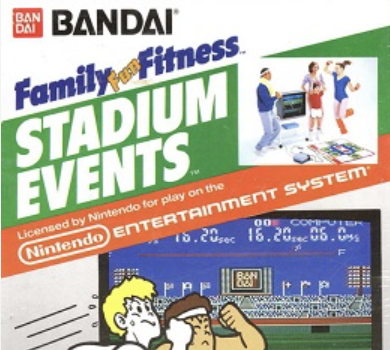
Somewhere out there, a handful of gray plastic cartridges sit in closets and display cases, most of their owners entirely unaware of what they hold. Stadium Events is not the best NES game ever made, nor the rarest by raw print count in the strictest sense. But through an accident of corporate timing, it became the single most mythologized cartridge in the history of Nintendo collecting — the grail that turned yard-sale finds into news stories.
A Fitness Game Ahead of Its Time
In 1987, Bandai released Stadium Events in North America as a track-and-field title built around an unusual peripheral: a floor mat called the Family Fun Fitness controller. Players ran in place, jumped, and side-stepped on the mat’s pressure pads to compete in events like the 100-meter dash, hurdles, and long jump. The concept was simple and, in hindsight, prophetic — a physical fitness game a full generation before motion controls became a household expectation.
Bandai’s ambitions for the Family Fun Fitness line were real. The mat was a platform, not a one-off, and Stadium Events was meant to anchor it. But the game arrived quietly, with a limited retail rollout, and never built the momentum a peripheral ecosystem needs to survive on its own.
Nintendo Steps In
Here is where the legend actually begins. Nintendo, recognizing the commercial potential of an exercise-mat accessory, acquired the rights to the Family Fun Fitness technology from Bandai. The company rebranded the mat as the Power Pad and folded it into its own first-party lineup.
Stadium Events itself was reworked and reissued under a new name most collectors know well: World Class Track Meet. In its Nintendo-branded form, bundled with the Power Pad and often the console itself, the game reached millions of homes and became genuinely common.
The very thing that made World Class Track Meet ordinary is what made Stadium Events extraordinary: they are, at their core, nearly the same game — separated only by a corporate handoff and a recall.
To clear the way for the rebrand, Nintendo pulled the existing Bandai-branded Stadium Events product from shelves. Copies already in the retail channel were said to have been recalled and, in many accounts, destroyed. Only a small number had sold through to actual customers before the plug was pulled.
Why So Few Survive
Rarity in collecting is rarely about a single cause. Stadium Events is scarce because several factors stacked on top of one another:
- A limited initial release. The game was never a nationwide blockbuster launch; distribution was narrow to begin with.
- A recall and reported destruction of unsold retail stock once Nintendo moved to rebrand.
- Peripheral dependency. The game required the fitness mat, which shrank its audience and its perceived long-term value in the eyes of the original buyers.
- Casual disposal. The families who did buy it saw a discontinued exercise game, not a future collectible — boxes were tossed, manuals lost, carts left loose in bins.
The result is a stark divide between the two formats that survive. Loose cartridges turn up occasionally and are prized but obtainable for dedicated collectors. Complete-in-box copies — cart, box, manual, and inserts intact — are the true prize, and confirmed examples number in the low double digits by most hobby estimates. Sealed copies are rarer still and occupy a tier almost entirely their own.
PAL and NTSC: Two Different Stories
The Stadium Events name also exists in the PAL regions, and the distinction trips up newcomers constantly. A PAL version was released in Europe and Australia, and while it is far from a common game, it exists in meaningfully greater numbers than the North American NTSC Bandai release. When collectors and the press speak of the “holy grail,” they almost always mean the NTSC boxed copy — the version tied directly to Nintendo’s recall and rebrand.
Confusing the two has led to more than one disappointed seller who believed a European copy carried the same six-figure aura as its American cousin. It does not. The scarcity that defines the legend is specific to the North American release.
The Listings That Shocked the Hobby
For years Stadium Events lived as a whispered rarity among tape-trading forum veterans. Then the internet did what the internet does. A series of eBay listings in the late 2000s dragged the game into mainstream view, with a boxed NTSC copy reportedly changing hands for a sum that stunned onlookers who thought old Nintendo carts were worth a few dollars at most. News outlets picked up the story. Suddenly, ordinary people were checking their attics.
That publicity had a lasting effect. It seeded the idea — later proven repeatedly across the hobby — that a common-looking gray cartridge could be worth a small fortune under the right circumstances. Stadium Events became shorthand for hidden treasure, the game everyone hoped was buried in a box of childhood junk.
Enter Professional Grading
As third-party grading matured and encapsulated games became the benchmark for high-end value, Stadium Events took on a new dimension. A loose cart is desirable; a graded, sealed, or high-grade complete-in-box copy is a landmark acquisition. Grading did two things for the game at once: it authenticated genuine copies in a market where fakes and reproduction boxes had become a real hazard, and it created a shared, objective language for condition that let the tiny population of survivors be ranked against one another.
In a game this scarce, provenance and condition don’t just add value — they are the value. The difference between a battered survivor and a pristine, encapsulated example can be the difference between a notable sale and a record one.
Authentication matters more here than almost anywhere else in the hobby. Because the box is where the money lives, reproduction and restored boxes have circulated for years. The rise of grading gave serious buyers a way to spend with confidence, which in turn deepened demand for the genuine article.
Fakes, Reproductions, and Buyer Beware
No discussion of Stadium Events is complete without a warning. The same fame that made it famous made it a target. Reproduction boxes, reprinted manuals, and “married” copies — a genuine loose cart paired with a fabricated box — have all surfaced. For a game where a complete example can rival a used car in value, that risk is not academic.
This is precisely why the grading era reshaped Stadium Events collecting. The market moved from trusting individual sellers to trusting an encapsulated, third-party-verified holder. For the highest-value copies, an unauthenticated sale is now the exception rather than the rule.
Why It Matters to Collectors Today
Stadium Events endures as the definitive NES rarity not because it is the oldest or the best, but because its story is complete: a genuine game, a genuine recall, a genuine tiny population, and a genuine market that pays attention. It set the template every later “grail” would be measured against.
For collectors, the lessons are practical. Provenance and authentication are everything on a game this scarce — buy the paperwork, buy the holder, buy the story. Understand which region and format you’re actually chasing, because the PAL and NTSC copies live in different universes of value. And remember what the eBay listings taught an entire generation: the most valuable thing in the room can look exactly like the most ordinary. Stadium Events is the reason serious collectors still look twice at a plain gray cartridge — and it will likely hold that mythic status for as long as the NES is collected at all.